Retail space trends – these are the characteristics that international brands are now looking for in premises
The space requirements of international brands have changed rapidly in recent years. Companies are also entering new markets in a way that differs from the past. What kind of things do shopping centres and businesses looking for retail premises expect right now from their spaces and landlords – and what are the key factors when entering new markets?
Trend reports and market analyses published between 2024 and 2026 by leading professional real estate organizations and international research and consulting firms show that significant changes have taken place in the space needs of international brands in recent years. This development is driven by factors including shifts in consumer behaviour, the growth of e-commerce and a greater focus on shopping as an experience in itself.
By examining the reports, it is possible to distinguish eight trends that currently have a key impact on the business premise and partner choices by international companies.
The Signe property being built in the heart of Helsinki has a strategic location near one end of Aleksanterinkatu, the city’s best-known shopping street, and between the city centre’s most attractive shopping destinations, Stockmann and Forum. It is practically impossible to visit the centre of Helsinki without passing by Signe.
2. The brand experience
Another trend is the emphasis on experiential retail. Customers have begun to favour stores that offer experiential and social activities alongside products, such as product testing, workshops, AR experiences or personalised shopping events. This sets new requirements for the store’s facilities, technology and atmosphere.
According to reports, spaces are increasingly chosen on the basis of quality rather than the number of square metres. Every square metre is expected to produce value either through sales, customer experience or brand building. Data collected from the premises and smart data analytics are utilised in the optimisation of the use of space. Cost-effectiveness also means lower and more predictable operating costs for companies, which is why brands prefer energy-efficient properties with modern building technology.
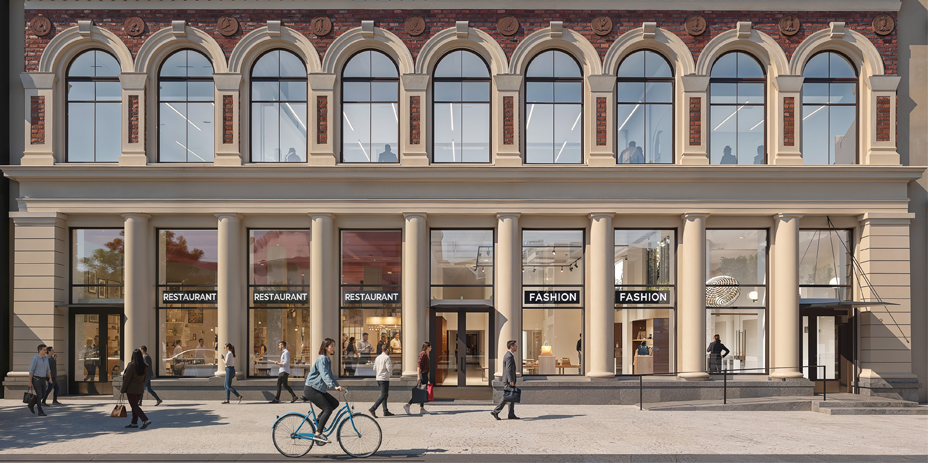
The emphasis on the quality of the shopping environment increases the value of effective commercial properties offering diverse spaces. Approximately 1,000 square metres of magnificent commercial space will be completed in 2027 in the fully renovated, historic Mannerheimintie 6 property.
4. Easy multi-channel services
The fourth trend is the multi-channel services offered by the premises. Brands are looking for spaces where online retail and brick-and-mortar shops work seamlessly together – online pickups and returns are handled quickly, and the physical store also functions as a showroom where products are displayed and tried before ordering online. Mobile payments and other digital services are also expected to be a seamless part of the customer experience. Customer data is utilised both in the customer experience and in service and space design.
5. Sustainability – not a value but a requirement
Reports show the rise of sustainability as one of the most important criteria in the choice of premises. Properties that do not meet the sustainability requirements of international brands are excluded already at the selection stage. In particular, the premises’ energy efficiency and emissions guide choices, as they have a major impact on the achievement of companies’ climate goals. Properties’ BREEAM and LEED certifications and the Global Real Estate Sustainability Benchmark (GRESB), which describes the sustainability of property owners, are essential for companies in sustainability comparisons.
According to reports, commercial premises are becoming an integral part of the urban environment. The same development applies to services – developing technology opens up new kinds of opportunities for cooperation across spatial and industry boundaries and for creating varied customer benefits and experiences. According to reports, one of the key needs of brands is to find an environment that generates synergies and draws people together around attractive shopping opportunities and services.
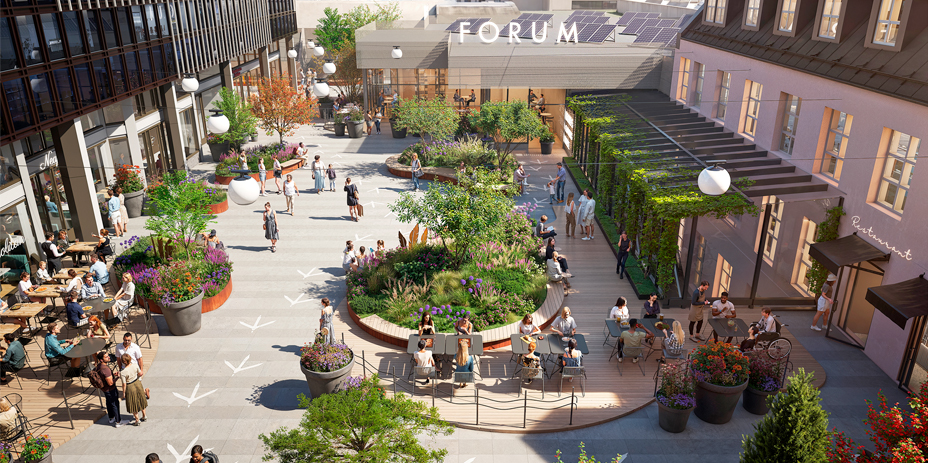
The Kukontori courtyard of Forum, the city centre’s best-known shopping centre, has developed into a cosy, communal meeting place, bringing a variety of benefits to the companies in the area.
7. Entering the market one step at a time
According to reports, companies are entering new markets more agilely than before. Markets are tested with pop-up stores or other lighter space solutions before larger investments. To support decision-making, a wide range of customer data is gathered – and when suitable premises are found, companies are ready to invest in them. The development has made customers appreciate landlords who offer versatile space options and enable transfers between spaces of different sizes as the business scales up or down.
8. The space provider becomes a strategic partner
Landlords also face new kinds of expectations. After years of pandemics, companies are paying even more attention to the stability of the landlord’s business. The idea is that only a company with a good level of resilience and risk management can support its tenant during difficult times. Landlords are also expected to continuously develop their premises and operating environment. The landlord is no longer just a space provider for companies, but a strategic partner that plays a significant role in enabling sustainable and profitable business.
A smooth entry to the Finnish market – these space trends are evident in the centre of Helsinki
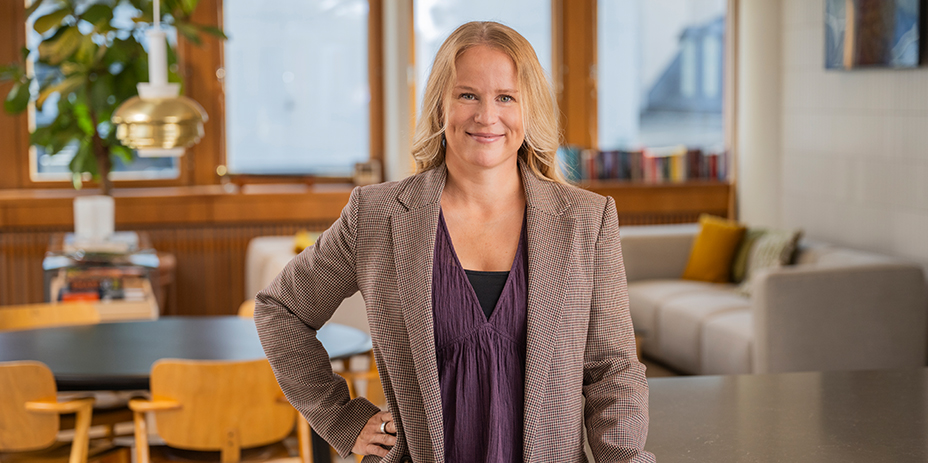
Kristiina Korhonen, Head of Leasing at Sponda, a real estate investment company specialising in properties in the centre of Helsinki, explains the issues that are currently emphasised in the Finnish market and the characteristic of business premises that are the most sought after.
Many international brands start their conquest of Finland from premises owned by Sponda in the heart of Helsinki. The property investment company, which has been operating in the area for a long time, knows the buying trends and closely follows the development of demand for spaces and the needs of companies.
The company’s Head of Leasing, Kristiina Korhonen, sees that the same trend is recurring in Finland as in the world – the fiercest demand is concentrated in the heart of the capital , where the number of visitors and services is growing strongly after the pandemic years.
“Helsinki’s city centre area is quite small and the supply of premium-class spaces is limited, so attractive properties get nabbed up in no time,” she says.
According to Sponda’s Head of Leasing, Kristiina Korhonen, an attractive operating environment is important to customers. “Companies take interest in the businesses around them, favouring operators that have experience of customers in the same target group and that are building ecosystems to serve them.”
According to Korhonen, companies that are breaking into a new market are primarily looking for customers. Stores want to locate where the best natural customer flows are, in an attractive local environment. It is equally important that the facilities enable a strong brand experience.
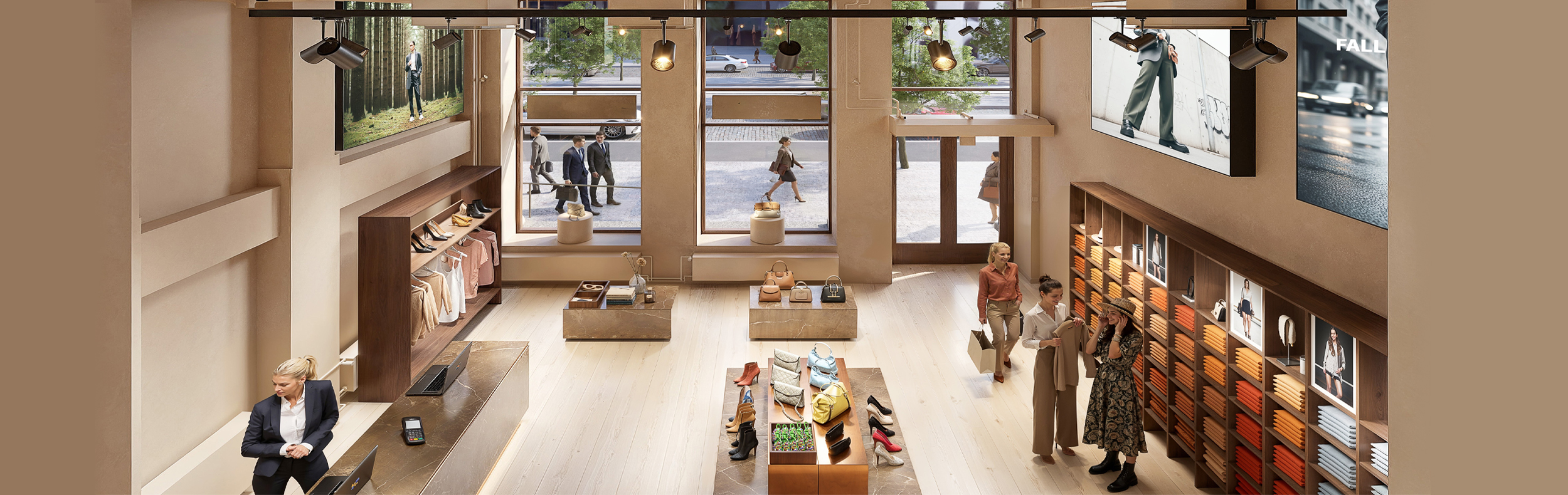
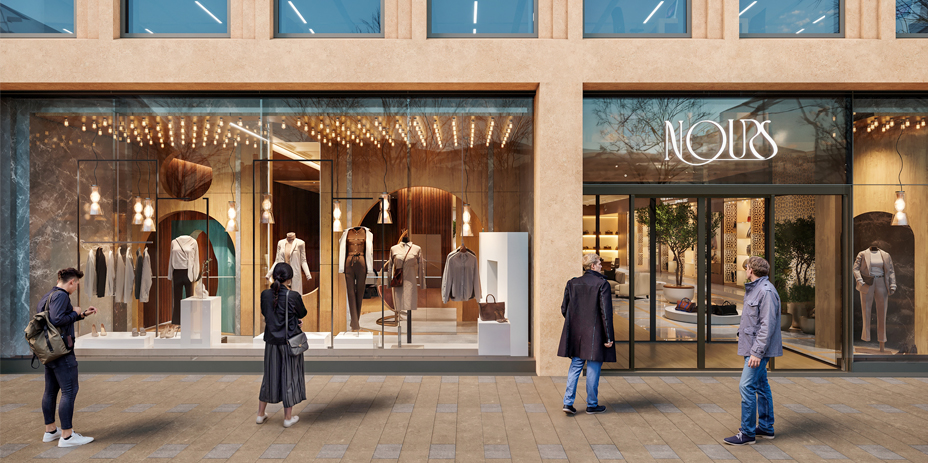
“Commercial space is a platform for today’s customer to build their own experiential world. The premises also feature large windows and prominent shopfronts, which allow the brand to tell its story and showcase its products even before the customer enters the store,” Korhonen describes.
Unique new development attracting interest
Demand for space in central Helsinki is driven by the rarity of new developments in the area. According to Korhonen, there is currently great interest in the Signe property, which will be completed in the area’s busiest part during spring 2027.
“The nearly 17,000-square-metre commercial and office building will be completed in the heart of the city centre, where the highest customer volumes converge. Thanks to its open floor plan and impressive ceiling height, it will offer the perfect platform for creating your own immersive brand experience.”
Signe aligns perfectly with today’s retail space trends.
The new development will also offer customers exceptional added value through its sustainability. The building’s life-cycle carbon footprint is over 30% lower than that of a traditional office building, and the development aims for LEED Platinum certification, gold-level WELL certification and an A energy rating.
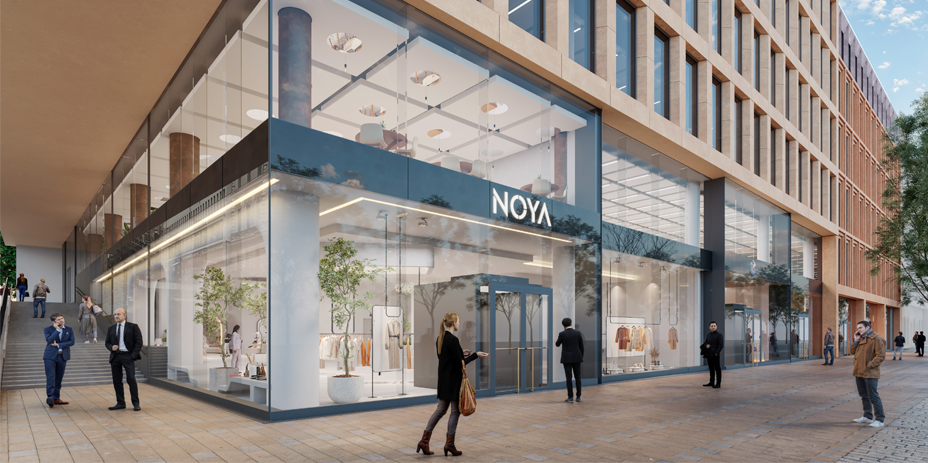
Featuring expansive glass walls, Signe will offer a luxurious setting for showcasing your brand. The street-level retail space that opens onto the urban surroundings will bring your company closer to customers than a shopping centre location, enabling more effective marketing investments in your brand.
“Signe has also attracted interest with its fascinating architecture. The building’s spaces merge attractively with the surrounding urban landscape and offer tenant companies maximum visibility through expansive glass walls.”
Korhonen says that several lease agreements are currently being negotiated for Signe’s premises.
“We want to build the city’s most interesting site into an ecosystem that optimally serves tenants, customers and local residents,” Korhonen sums up.