Berggren’s community-enabling facilities increase interaction and support a smooth customer experience
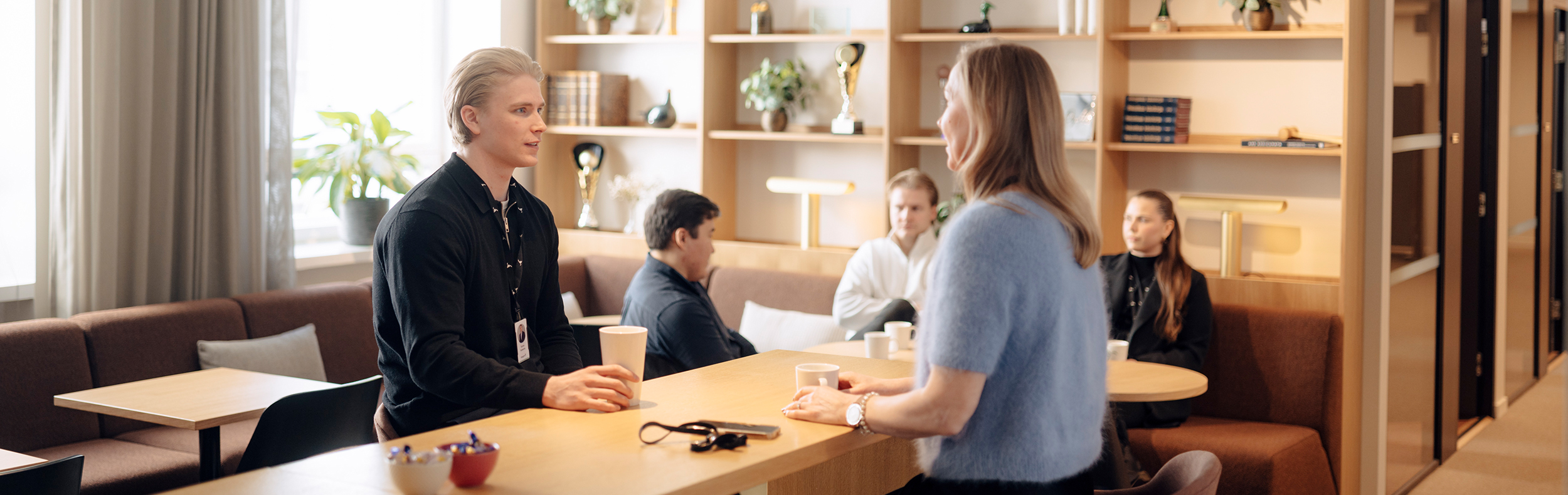
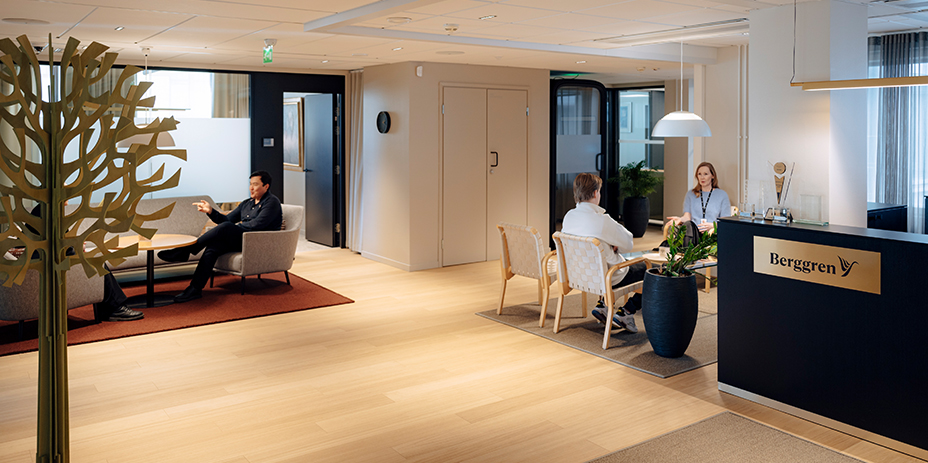
When entering Berggren’s office, a visitor is greeted by airy spaces, pleasant acoustics and a harmonious atmosphere. The company’s new premises in Kaartinkaupunki in Helsinki have strengthened the sense of community, increased opportunities for interaction and introduced new ways of working into day-to-day operations. For their part, sustainable material and furniture choices support the company’s values.
In addition to the Helsinki office, the internationally recognised, award-winning intellectual property rights expert organisation also has offices elsewhere in Finland, as well as in Germany and Spain. Operating in the fields of contract law, patents, trademarks and design protection, the company has hundreds of customers from different industries.
The law firm, which turns 90 this year, has operated in the centre of Helsinki throughout its history. The location has been a strategic choice for the company and a key part of its identity since the beginning. For almost half a century, the office was located in Kamppi.
Transfer to new premises made it possible to reform the company’s operating culture
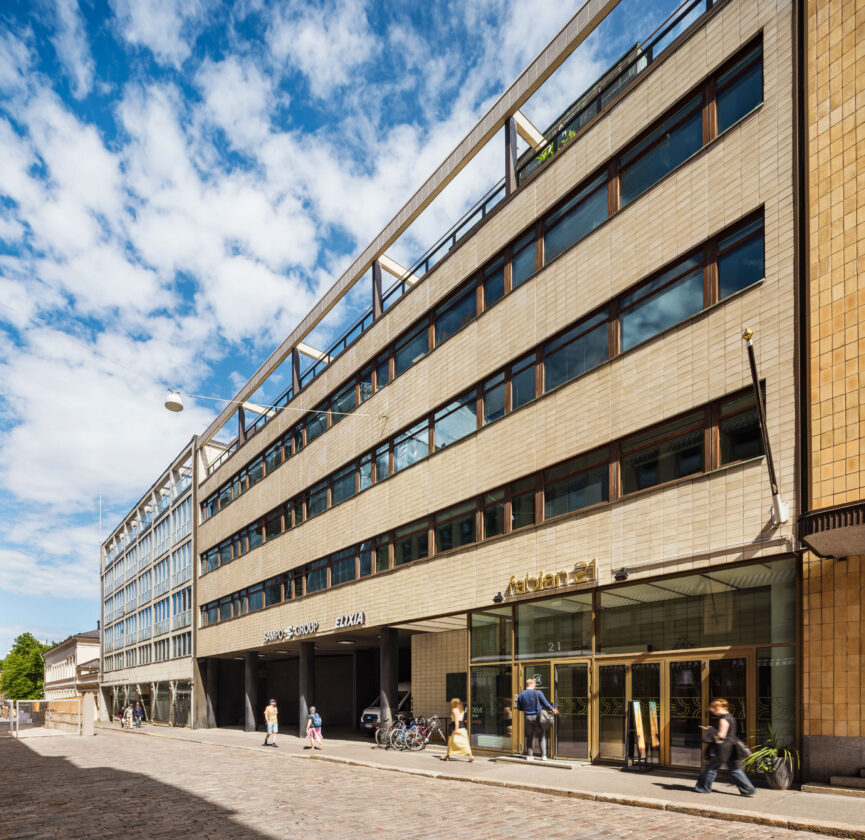
The transition to hybrid work, accelerated by the pandemic, posed a challenge to Berggren’s old space solutions, and the office in Kamppi, which occupied three floors, was no longer ideal for day-to-day activities. Rather than tweaking the premises within the constraints of the old layout, the company decided to find a new location that better suited modern ways of working and the company’s brand. The company found new premises that would support its operations in the Fabian 21 office building in Kaartinkaupunki.
“In terms of location, it was important for us to find a place that was in line with our brand. Facilities and the surrounding environment must also reflect what we want to be as a company. For us, it was a foregone conclusion that our office is located in the centre,” says Berggren’s VP of People & Culture Kati Sasse.
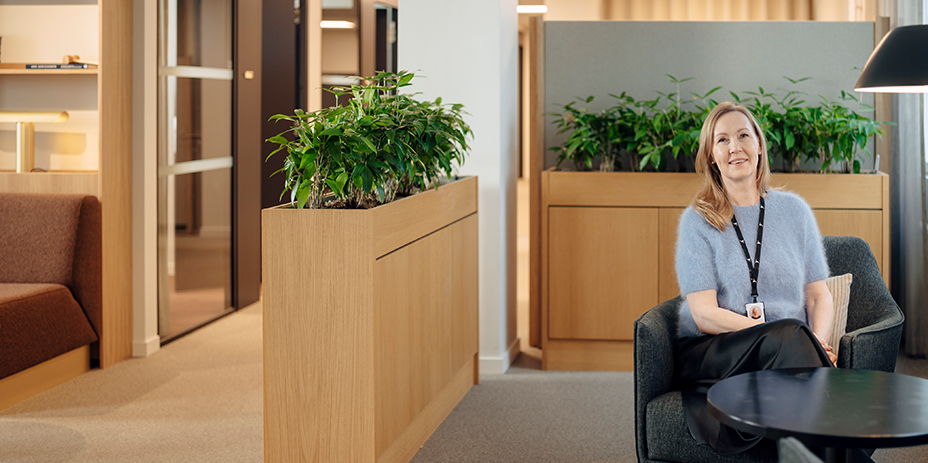
The new premises meant not only a change of address for the company, but also a strategically important choice. The new premises made it possible to reform the company’s operating culture, as the designated workstations were dispensed with and the premises were designed to support a sense of community. According to Sasse, it is easier to make functional changes in connection with relocation, especially as all the facilities are now located on the same floor.
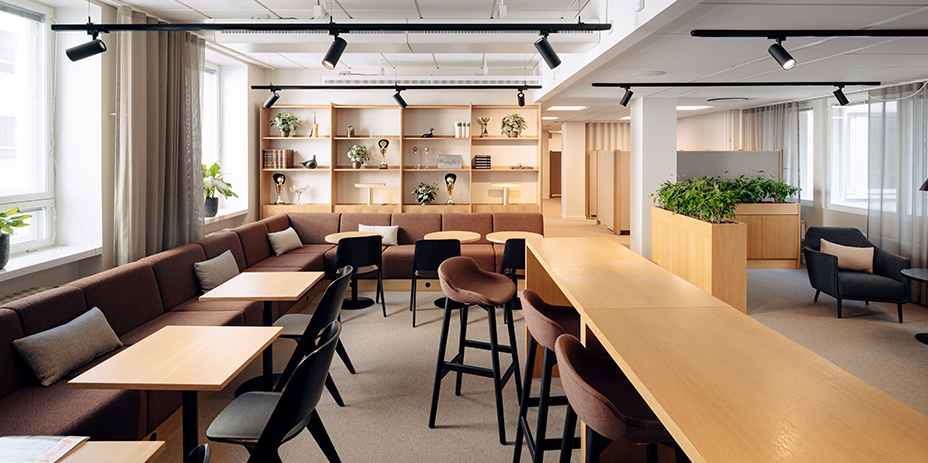
“The staff were closely involved in the relocation project. They were not so much asked about their dream wish list, but views on which factors are essential for the smooth running of the work. Legal work is highly confidential by nature: it is about customers’ legal matters, contracts and intellectual property rights, the handling of which requires uncompromising data security and a peaceful working environment,” Sasse says.
Our new premises support confidential expert work
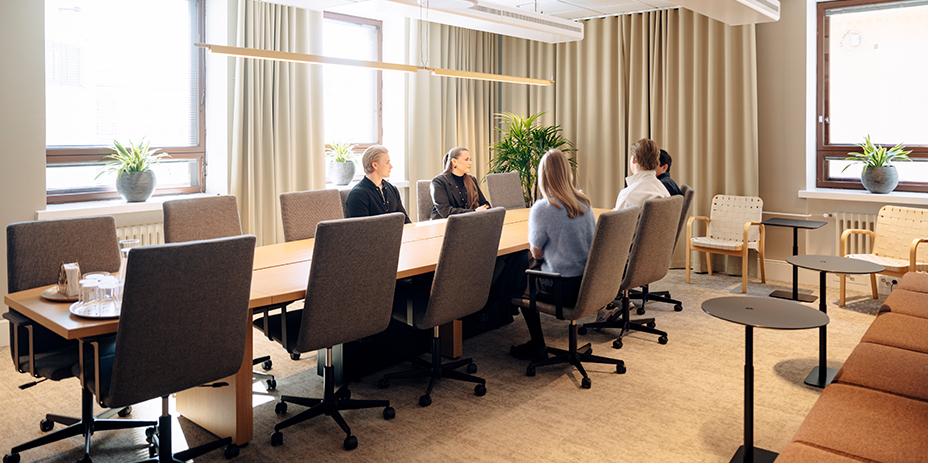
Security and confidentiality are reflected in spatial solutions. Staff and customer areas are clearly separated, and a sufficient number of single-person offices were planned for specialist work. Even though there are no designated workstations anymore, everyone has the opportunity to work in a space where concentration and sound insulation have been carefully taken into account.
Personnel views guided the design of spatial solutions
The move was prepared by a working group made up of different personnel groups that collected feedback on what was successful in the former premises and what could be done better. This ensured that the design work was based on the needs of day-to-day activities. Fyra’s interior architects, who had also designed the company’s previous premises, played a key role in the project.
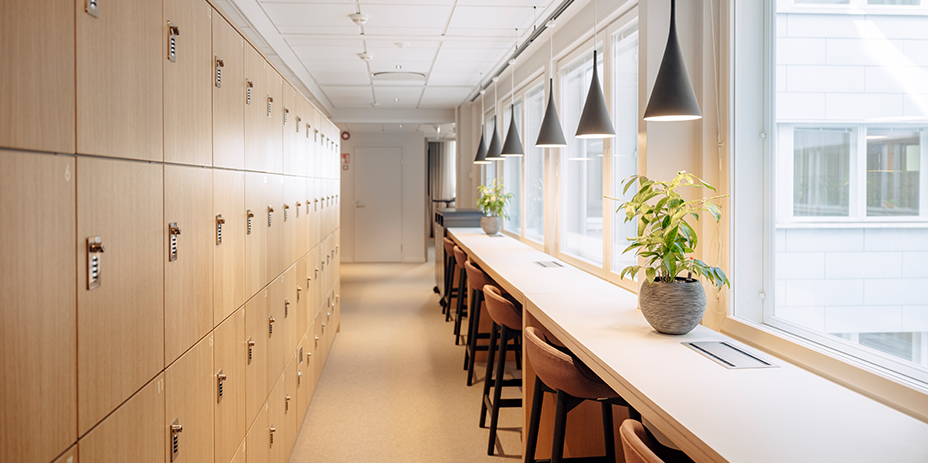
“Their understanding of the organisation’s ways of working was crucial to the functionality. Together, we refined the overall concept and regularly presented the plans to the staff. We wanted to communicate openly about what the staff could have a say about and what had already been decided. Of course, a change always raises questions, and in our case, people had questions about the availability of workstations and where to keep their belongings, for example,” Sasse says.
The end result was a completely new office that meets the needs of this organisation.
The feedback received about the premises indicates that the project was a success. Since the relocation in the autumn of 2025, staff feedback has been exceptionally positive. Feedback from customers has also been positive.
Versatile services in the building make everyday work smoother and easier
Shared workspaces were designed alongside single-occupancy workspaces. In addition, the staff have their own break room and kitchen, which are separated from the customer areas. The solution enables confidential discussions even in more informal situations. In connection with the move, the size of the office decreased from the previous 1,250 square metres to 780 square metres. According to Sasse, the office’s more compact size has produced positive effects.
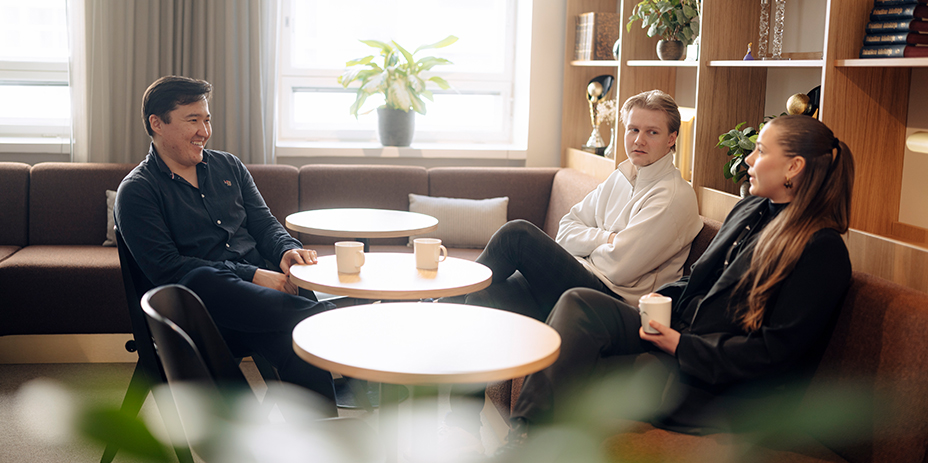
“When people no longer work on different floors, they encounter each other more naturally during a normal workday. People now run into colleagues in the corridors on a daily basis, whereas previously many of these encounters happened only occasionally. Informal interactions and spontaneous discussions have strengthened the sense of community in ways that could not have been planned on paper.”
In spatial design, this is also supported by the so-called pod work areas in the wider corridors. They invite you to sit down and exchange ideas with colleagues. One key starting point in spatial design was flexibility with regard to meeting rooms. The utilisation rate of the former office’s conference rooms remained low on a weekly basis, even though they took up a lot of valuable floor area. There are currently a limited number of conference rooms, and the building’s shared meeting rooms are utilised if necessary. According to Sasse, the solution is both cost-effective and operationally sound.
Informal encounters and spontaneous conversations have strengthened community in a way that could not be planned on paper.
The staff have actively made the premises their own and have also familiarised themselves with the services offered in the building. The building’s lunch restaurant makes life that little bit easier, especially on winter days, when it can be conveniently reached by a lift. In addition, the variety of restaurants located nearby offers rich pickings.
“Many people travel to work on foot or by bike, so bicycle storage, showers and changing rooms are an integral part of a well-functioning entity. In addition, the sports services located on the ground floor of the building support well-being as part of the working day,” says Sasse.
Sustainable solutions instead of new purchases
Sustainability was one of the key principles of the relocation project. Although the primary choices were based on location and functionality, the building’s BREEAM environmental certification was considered a significant added value. New furniture was purchased for Berggren’s previous office ten years ago, but this time the company adopted a different approach. Sasse explains that the interior architect surveyed the existing furniture, and many of the pieces were updated for the new facilities.
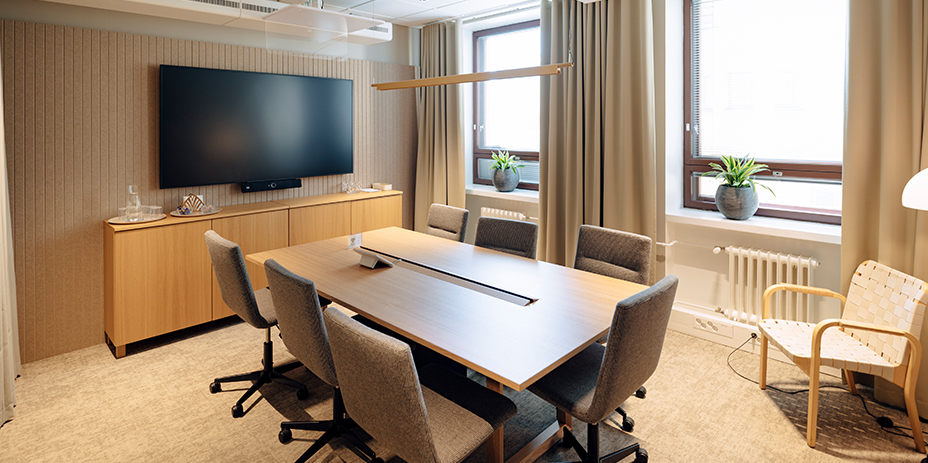
“New acquisitions were made after thorough consideration, and even then we favoured sustainable Finnish design that blends in naturally with the rest of the decor. The furniture was reupholstered, the surfaces were updated and the lighting was designed to match the space solutions. The result looks new, but is based on our conscious decision to recycle, modify and utilise what we already had.”
For the company, the most important things in the project were rapid decision-making, open communication and close cooperation between the parties. Decisions were made quickly, especially regarding the choice of materials and procurement.
“The collaboration was built on open lines of communication, and this was supported by the fact that the architect also attended the site meetings. We started rebuilding the premises from the concrete frame and utilised external expertise when our in-house skills were insufficient. As a result, a completely new office was created that meets our needs.”
The feedback from the premises speaks volumes about the success of the project. After the move in autumn 2025, the feedback from staff has been exceptionally positive.