

Psychologist Liisa Keltikangas-Järvinen: “A company’s most important space is its break room”
Professor emerita of psychology Liisa Keltikangas-Järvinen calls for a more regular and committed communality in today’s ultra-individual working life. Why is the creation of a sense of community so important in the workplace and what is the role of premises in building a corporate culture that is communal and strengthens identity?
Liisa Keltikangas-Järvinen, a veteran researcher and pioneer of Finnish temperament and personality studies, notes that working life is facing a situation where solutions and practices originally created with good intentions have become a source of burnout among employees, while causing problems regarding productivity for companies.
“There are underlying trends, all of which reflect the strengthening of an individualistic and overly psychologised culture,” she says.
We have forgotten that work is not just an individual’s ego trip.
According to the psychologist, one example of this is excessive emotion talk and attention to people’s individual needs, both of which have become more common in workplaces. Since everyone’s needs and feelings can never be taken into account equally, some people get the opportunity to act more individually than others.
“We have lost the idea that work is more than just an individual’s ego trip, that it also has a broader societal purpose.”

Another challenge is the dramatic increase in remote working. According to the psychologist, working separately hinders the creation of the sense of community and identity that are important for the employees themselves – and erodes social skills.
“Alongside demanding customers and the sense of being rushed, a new source of stress has emerged – interaction with colleagues. Remote work supports this development by offering the opportunity to withdraw from situations in which social skills would develop,” she says.
Being present creates a sense of community
What should we do in this situation? Keltikangas-Järvinen refers to human biology in her answer. Humans are social animals who need other people.
“A sense of community is not created by an abstract awareness of belonging to something; instead people must be physically in the same place. Building trust requires knowing the other person.”
The psychologist reminds us that people also communicate with their bodies, so misunderstandings can easily occur in interaction that lacks gestures and vocal cues.

“Research shows that different people speak in remote meetings and the meetings also proceed differently, so they produce different solutions from those generated by in-person meetings. It is impossible to whether they are worse or better, but they are different,” she says.
According to the psychologist, communality also supports the building of a person’s identity. Identity consists of where a person feels they belong, and the self-image is formed by the qualities and adjectives they associate with themselves in different areas of life.
“Identity and self-image are the foundation and cornerstone of the choices a person makes. Alongside childhood identity, work identity is very important. It arises from a sense of being part of the workplace and one’s own group, time spent together and shared goals.”
Value of presence and engagement
How, then, could communality be strengthened in the workplace? According to the expert,there are two ways. By making sure that everyone stands behind common goals and by ensuring that employees experience a sense of belonging. This creates an experience of a safe group, where individuals can develop and be appreciated by others.
According to Keltikangas-Järvinen, companies could also use ideological means to steer people’s actions in a more communal directions. For example, by showing through leadership, rewards and positive speech that presence, engagement and working for the common good are valued in the company.
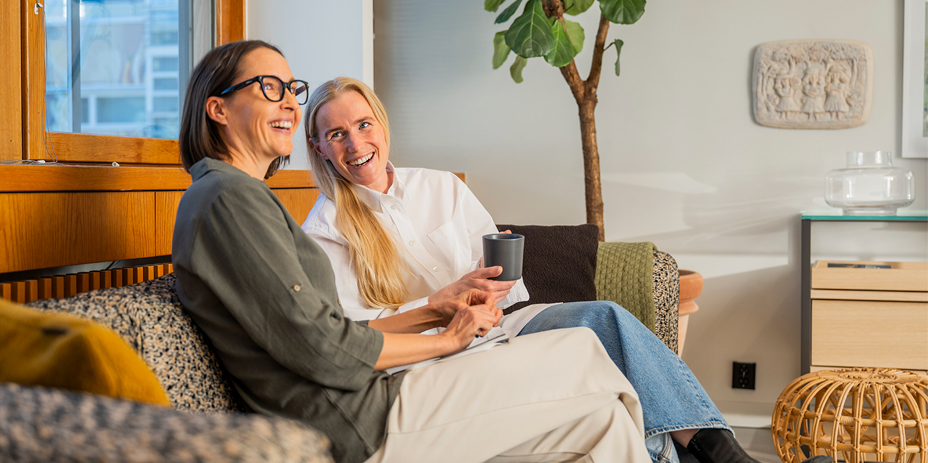
A sense of community is built on laughter and shared moments experienced at the office.
The psychologist regrets that it is now increasingly thought that the only way to develop professionally is to change jobs, and consequently commitment has received a slightly more negative reputation.
“This is not a sustainable idea. Tacit knowledge accumulates and expertise is honed over time. At the same time, companies create a natural, competence-based hierarchy.”
Regularly and naturally together
According to the psychologist, creating a sense of community does not require specific events or celebrations. The most important thing is that people meet each other at work on a regular basis. That they have a break at a certain time and share their thoughts and experiences.
“In this sense, the break room is the most important office space for the company. These collective encounters help build a shared identity, disseminate knowledge and generate innovations that are important for work and day-to-day life. “They also provide an opportunity to vent emotions that would otherwise be carried to meetings,” says the psychologist.
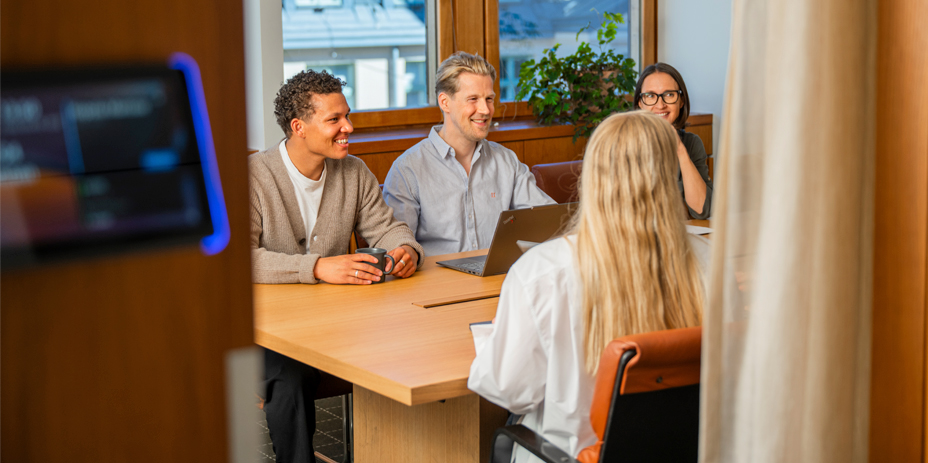
Break rooms provide an opportunity to vent emotions that would otherwise be carried to meetings.
Keltikangas-Järvinen refers to a study where a strong sense of community was born among immigrants to America through choral singing. The choirs first brought together family members and then extended families, and the activities gave rise to shared dance venues.
“Our brains are structured in such a way that we are bound together by common topics and experiences. When people eat together, they enjoy themselves; when they sing together, they enjoy themselves even more. Engaging in physical activity together increases the sense of belonging even more.”
The psychologist emphasises that it is crucial that emotions in the workplace are applied to working together and building community, rather than listening to individual employees’ feelings or wallowing in emotion talk.
Facilities play an important role
Keltikangas-Järvinen sees an interesting cause-and-effect chain in the development of working methods. First, we moved from office rooms to open-plan offices, where we no longer could concentrate and being sociable became a burden – then we shifted to remote work, which created a threat to a sense of community and innovation.

According to Keltikangas-Järvinen, the problems arising from the extremes in thinking demonstrate the role that diverse premises that support communality play in building a sense of community, enabling recovery and ensuring work performance. She encourages workplaces to make sure that there are enough communal and silent spaces.
“Working in an open-plan office is exhausting for an extrovert, as they are constantly engaged with their surroundings. An introvert also needs to retreat and recharge, as they tend to attract more attention in an open-plan office than in their own private office due to their lower social engagement.”
Keltikangas-Järvinen emphasises that remote work is also a good option when it suits the nature of the job and is used in to a suitable extent.
“Excesses always lead to disadvantages. Whenever the common good comes first and everyone compromises their own needs, a sense of community arises to bind and support the entire workplace,” says Keltikangas-Järvinen, smiling.
Liisa Keltikangas-Järvinen is a professor emerita of psychology and a pioneer in research into temperament and personality, known as an advocate of communality and a critic of individualistic culture. She is also a researcher in the field of social skills and self-esteem and a respected nonfiction writer with an exceptional ability to popularise research findings in her field and major societal trends.
Real estate investment company Sponda wants to shake up working life by highlighting the importance of the humankind’s most important value, presence. What can we achieve as individuals, communities and society if we are truly present in what we do? What happens if we lose our most important asset once and for all? In its communications, Sponda also shares concrete instructions for practising presence and reflective interaction, building an organisation characterised by a sense of presence, and designing premises that create a sense of community. Sign up for our newsletter to receive all content directly to your inbox.